







All Is Not Bad: Rethinking Entrepreneurship in West Bengal
Entrepreneurship in West Bengal is too often discussed through the language of difficulty. Speak to aspiring founders, industrial promoters, startup enthusiasts, or even family business successors, and a familiar narrative quickly emerges: the state is difficult, the system is slow, the ecosystem is uncertain, and success is better pursued elsewhere.
This perception is not entirely unfounded. West Bengal does face real and well-known challenges. Regulatory complexity, delays in execution, infrastructure gaps, fragmented supply chains, land-related anxieties, and uneven business support systems have all contributed to a climate of caution. In many sectors, entrepreneurs are required to spend disproportionate energy simply navigating the environment before they can focus on building and growth.
Yet, if we are to be intellectually honest, we must also confront another truth: all is not bad.
Across the state, there are entrepreneurs who are building, adapting, surviving, and in many cases, succeeding. They are not succeeding because the environment is frictionless. They are succeeding because they are approaching it with greater clarity, preparedness, discipline, and resilience.
That distinction matters.
West Bengal’s challenge today is not only structural. It is also perceptual. And in many ways, that perception has now become a challenge in itself.
A weak perception environment can be as damaging as a weak policy environment. It affects investor confidence, discourages first-generation entrepreneurs, influences where young talent chooses to build, and gradually reinforces the belief that enterprise here is inherently more difficult than elsewhere. Over time, this becomes self-fulfilling. When enough people believe that a place is not conducive to business, fewer people are willing to test whether that belief is still entirely true.
This is where West Bengal must pause and reassess itself.
The state undoubtedly needs stronger industrial facilitation, more predictable execution, better infrastructure, and sharper institutional responsiveness. There is no virtue in denying these requirements. But it would also be a mistake to reduce the entire entrepreneurial future of Bengal to a narrative of helplessness.
Because that narrative is incomplete.
There are enough examples – across sectors and scales – to show that success is possible here. The more useful question, therefore, is not whether challenges exist. They do. The more important question is whether entrepreneurs are entering the journey with sufficient preparation to navigate those challenges intelligently.
This is where many entrepreneurial journeys are won or lost—not in ambition, but in preparedness.
Far too often, enterprises begin with enthusiasm but without adequate market validation, legal readiness, financial structuring, operational planning, or risk assessment. When difficulties inevitably arise, the conclusion is quickly drawn that the ecosystem has failed the entrepreneur. In some cases, that may indeed be true. But in many others, the enterprise itself was not sufficiently prepared for the terrain in which it sought to operate.
That is not a criticism. It is a necessary correction.
If Bengal is to produce more successful enterprises, the entrepreneurial conversation must move away from sentiment and closer to strategy.
A serious entrepreneur in West Bengal today must begin with a clearly defined goal, a realistic roadmap, and a grounded understanding of the state’s operating conditions. Whether one is building in manufacturing, agri-value addition, packaging, engineering support services, consumer products, logistics, or technology, success will depend not only on vision, but on the ability to anticipate constraints and build around them.
That means understanding geography, logistics, regulatory touch points, labour realities, financing options, and the market beyond one’s immediate locality. It means setting realistic milestones instead of chasing premature scale. It means treating compliance not as an afterthought, but as a discipline. It means building financial buffers, exploring institutional support, and remaining open to partnerships, contract manufacturing, market linkages, and, where relevant, export pathways.
Above all, it means replacing the old and dangerous habit of saying, “We will cross that bridge when we come to it.”
In today’s business environment, that is no longer strategy. That is vulnerability.
The future belongs to entrepreneurs who prepare for multiple bridges before they arrive.
This is precisely why the larger ecosystem conversation in West Bengal must now mature. The State needs not only better policies and smoother execution – important as those are, but also a stronger culture of entrepreneurial preparedness. It needs more founders who are guided early, better informed, commercially grounded, and capable of navigating complexity with confidence rather than fear.
Equally, we need to identify, celebrate, and learn from those who have succeeded here—not merely as exceptional stories, but as practical examples. Their journeys matter because they challenge the lazy assumption that enterprise in Bengal is destined to struggle. They demonstrate that while the path may be harder, it is by no means closed.
That is an important distinction for the future of the state.
West Bengal does not suffer from a lack of enterprise, talent, or ambition. What it suffers from, in part, is a deficit of business confidence. And confidence cannot be rebuilt through slogans. It can only be rebuilt through visible success, institutional support, practical guidance, and a collective shift from pessimism to preparedness.
That is where ecosystem-building institutions have a critical role to play.
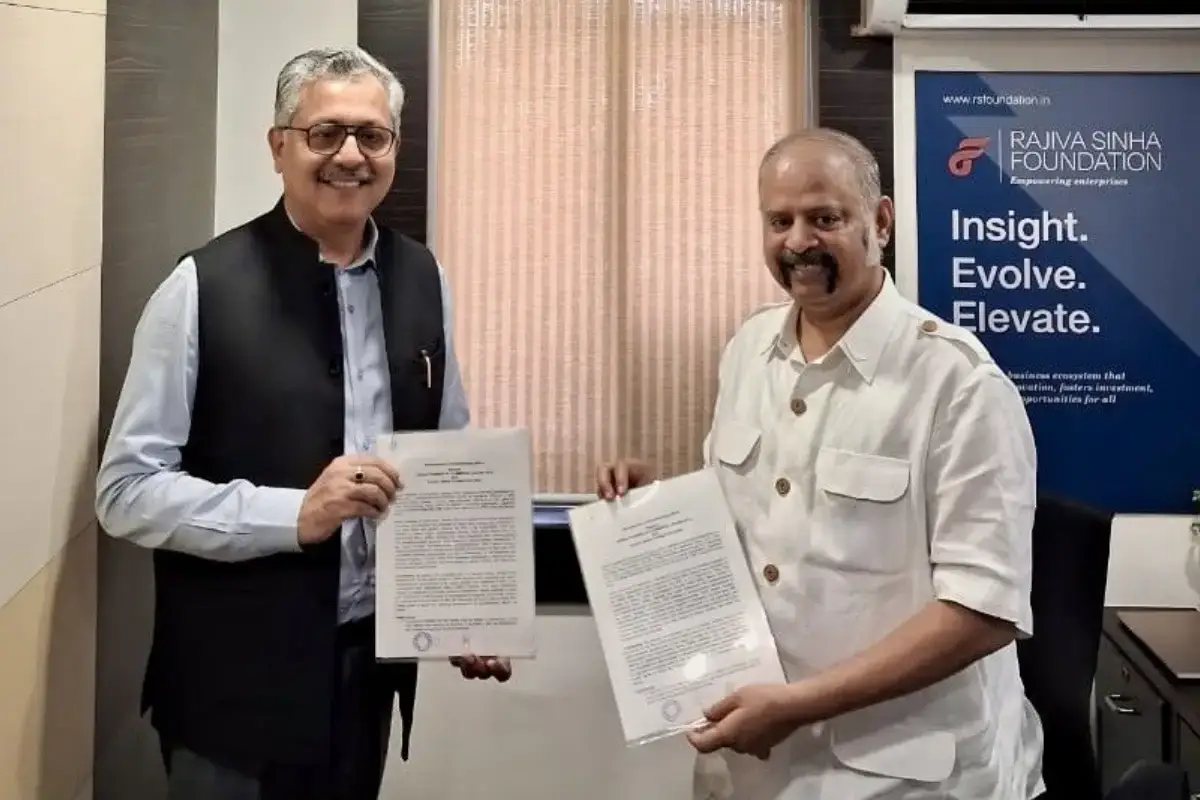
At the Rajiva Sinha Foundation, we believe that entrepreneurship must be supported not only in spirit, but in structure. Founders need more than encouragement. They need informed guidance, strategic mentoring, business preparedness, market orientation, and realistic pathways for enterprise development. If more entrepreneurs are to thrive in Bengal, they must be enabled not merely to dream, but to build intelligently.
West Bengal’s entrepreneurial story is still being written.
It will not be shaped only by government. Nor only by policy. Nor only by capital.
It will also be shaped by whether we continue to see this state only through the lens of difficulty—or whether we begin to see it through the lens of possibility, discipline, and long-term enterprise.
The challenges are real. But so are the opportunities.